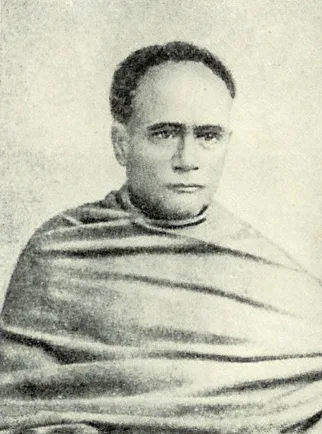
Ishwar Chandra Vidyasagar
Educator and reformer who championed widow remarriage
- Lived
- 70 yrs
- 1820 – 1891
- Works listed
- 2
- Book
- Honours
- 0
- Awards & distinctions
- Profile views
- 3
- 0 followers
Ishwar Chandra Vidyasagar was a scholar, educator and social reformer of nineteenth-century Bengal. He led the campaign that produced the Hindu Widows’ Remarriage Act of 1856, opened schools for girls and wrote Barna Parichay, the Bengali primer still used today. He died in 1891.
Biography
Education
He opened dozens of schools for girls in Bengal and supported Bethune School. He reformed and simplified Bengali prose and the Bengali alphabet, and his primer Barna Parichay (1855) has taught generations of children to read.
Ocean of learning
Born to a poor Brahmin family, Ishwar Chandra is said to have learnt English numerals by reading milestones as he walked to Calcutta with his father. At the Sanskrit College he excelled so much that he was given the title “Vidyasagar”, meaning ocean of learning, and he later became its principal, opening it to students of non-Brahmin castes.
Widow remarriage
Vidyasagar argued from Hindu scriptures that widows could remarry, collecting signatures and petitioning the government despite fierce orthodox opposition. The Hindu Widows’ Remarriage Act was passed in 1856, and he arranged and paid for many remarriages, including his own son’s marriage to a widow.
Generosity and legacy
Known as “Dayar Sagar”, ocean of kindness, for his charity, he spent his later years among the Santhal people in Karmatanr. He died in Calcutta on 29 July 1891. Vidyasagar College and Vidyasagar University bear his name.
Timeline
-
1820
Born in Birsingha, Midnapore district, Bengal Presidency (now West Bengal)
-
1839
Receives the title Vidyasagar
-
1851
Principal of the Sanskrit College
-
1855
Barna Parichay
-
1856
Hindu Widows’ Remarriage Act passed
-
1891
Dies in Calcutta
-
1891
Died, aged 70
Notable works
-
1855
Barna Parichay Book
-
1847
Betal Panchabinsati Book
Did you know?
-
1
He reportedly learnt English numbers from milestones on the road.
-
2
His son married a widow.
-
3
His Bengali primer is still used today.
Connections
Related people
Frequently asked
Who is Ishwar Chandra Vidyasagar?
Ishwar Chandra Vidyasagar was a scholar, educator and social reformer of nineteenth-century Bengal. He led the campaign that produced the Hindu Widows’ Remarriage Act of 1856, opened schools for girls and wrote Barna Parichay, the Bengali primer still used today. He died in 1891.
When did Ishwar Chandra Vidyasagar die?
Ishwar Chandra Vidyasagar died on 29 July 1891 at the age of 70.
Where is Ishwar Chandra Vidyasagar from?
Ishwar Chandra Vidyasagar was born in Birsingha, Midnapore district, Bengal Presidency (now West Bengal).
What is Ishwar Chandra Vidyasagar known for?
Ishwar Chandra Vidyasagar is best known for The Hindu Widows’ Remarriage Act of 1856; Barna Parichay; girls’ schools; reforming Bengali prose.
References
- Ishwar Chandra Vidyasagar — Wikipedia. Wikipedia. Retrieved 27 October 2026.
- Ishwar Chandra Vidyasagar — Britannica. Encyclopaedia Britannica. Retrieved 27 October 2026.
- Ishwar Chandra Vidyasagar — IMDb. IMDb. Retrieved 27 October 2026.
- Ishwar Chandra Vidyasagar — Goodreads author page. Goodreads. Retrieved 27 October 2026.
- Ishwar Chandra Vidyasagar — Hindi Wikipedia. Wikipedia (Hindi). Retrieved 27 October 2026.
- Ishwar Chandra Vidyasagar (Q964111) — structured data. Wikidata. Retrieved 27 October 2026.
Includes material from the Wikipedia article “Ishwar Chandra Vidyasagar”, licensed under CC BY-SA 4.0. That text is available under the same licence. Learn more
External links
Featured in
About this profile
- Researched by the TrackFame editorial team; reviewed by Sanjay Sokal under our editorial policy
- First published 27 October 2026
- Last updated
Cite this page
“Ishwar Chandra Vidyasagar.” TrackFame, last updated 28 October 2026. https://trackfame.com/person/ishwar-chandra-vidyasagar
Discussion 0
Sign in or create an account to join the discussion.
No comments yet — be the first.
More in Literature
 Literature
Mahasweta Devi
Bengali writer and activist for tribal communities
1926 – 2016
 Literature
Kabir
Fifteenth-century poet-saint of the Bhakti movement
 Literature
Kamala Das
Poet in English and short-story writer in Malayalam
1934 – 2009
 Politics & Leadership
Sarojini Naidu
Poet, freedom fighter and first woman governor of an Indian state
1879 – 1949
 Activism & Humanitarian
Savitribai Phule
Pioneer of women’s education and India’s first woman teacher
1831 – 1897
 Literature
Mirza Ghalib
Urdu and Persian poet of the late Mughal era
1797 – 1869