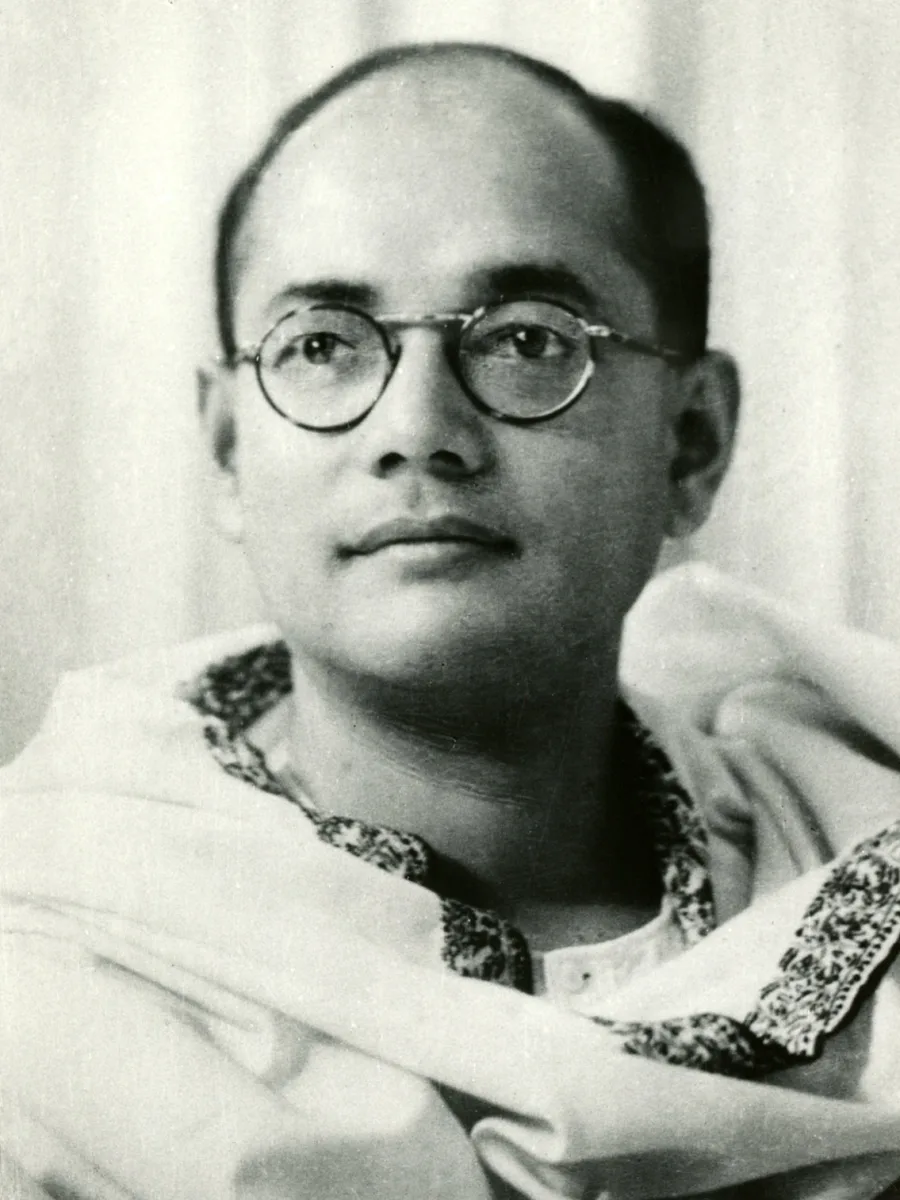
Subhas Chandra Bose
Freedom fighter and leader of the Indian National Army
- Lived
- 48 yrs
- 1897 – 1945
- Works listed
- 0
- Career highlights
- Honours
- 0
- Awards & distinctions
- Profile views
- 1
- 0 followers
Subhas Chandra Bose, known as Netaji, was a twice-elected president of the Indian National Congress who broke with its leadership and sought armed help abroad to end British rule. He led the Indian National Army and the Provisional Government of Free India during the Second World War.
Biography
Early life
Bose was born into a prosperous Bengali family in Cuttack and studied philosophy at Presidency College and Scottish Church College in Calcutta. He went on to Cambridge and in 1920 passed the Indian Civil Service examination, but resigned in 1921 to join the national movement under the guidance of Chittaranjan Das.
Congress leader
Bose rose quickly in Bengal politics, serving as chief executive of the Calcutta Corporation and later as mayor of Calcutta (1930). He was jailed repeatedly by the British.
A leader of the Congress left wing, he was elected party president in 1938 and, against Gandhi’s preferred candidate, again in 1939. Differences with the leadership led him to resign, and he formed the Forward Bloc.
Azad Hind and the INA
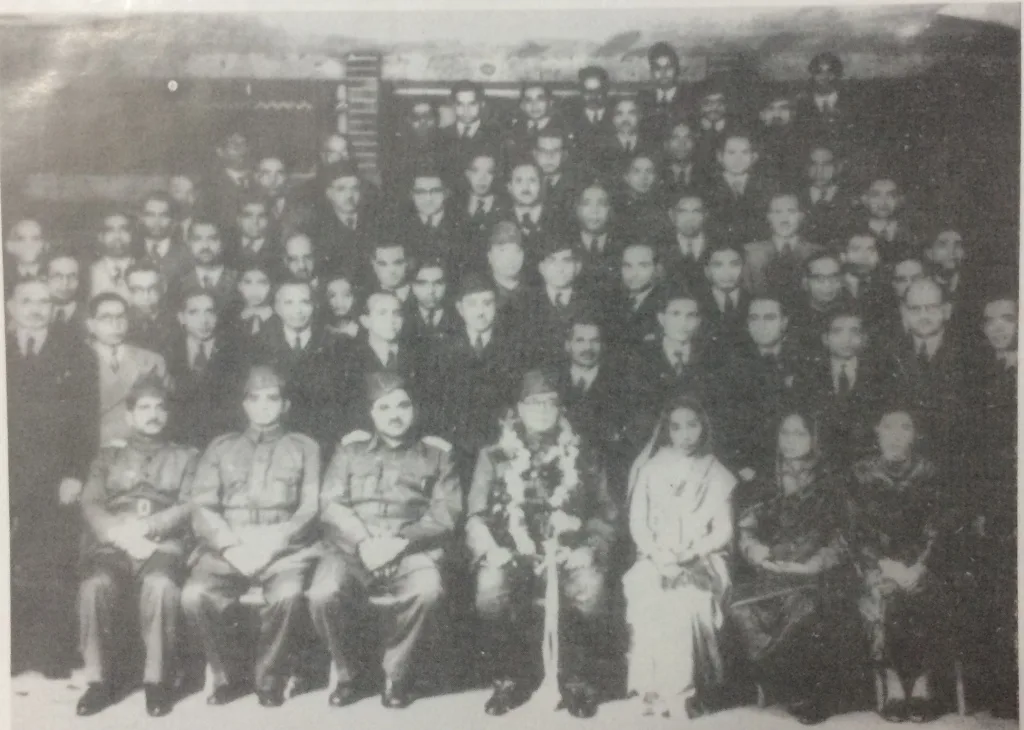
In January 1941 Bose escaped house arrest in Calcutta and travelled to Germany and then to Japanese-held Southeast Asia, seeking support against Britain. In Singapore in October 1943 he proclaimed the Provisional Government of Free India (Azad Hind) and took command of the Indian National Army, which fought alongside Japanese forces in Burma and northeast India.
Bose died of burns after a plane crash in Taiwan on 18 August 1945, according to official inquiries; the circumstances of his death long remained a subject of public debate in India.
The great escape
In January 1941, under house arrest in his family home in Calcutta, Bose disguised himself as a Pathan insurance agent named Mohammed Ziauddin and slipped away with his nephew Sisir Kumar Bose. He travelled through Peshawar and Kabul to Moscow and Berlin, a journey that became legendary. The car used in the escape is preserved at Netaji Bhawan, Kolkata.
Azad Hind
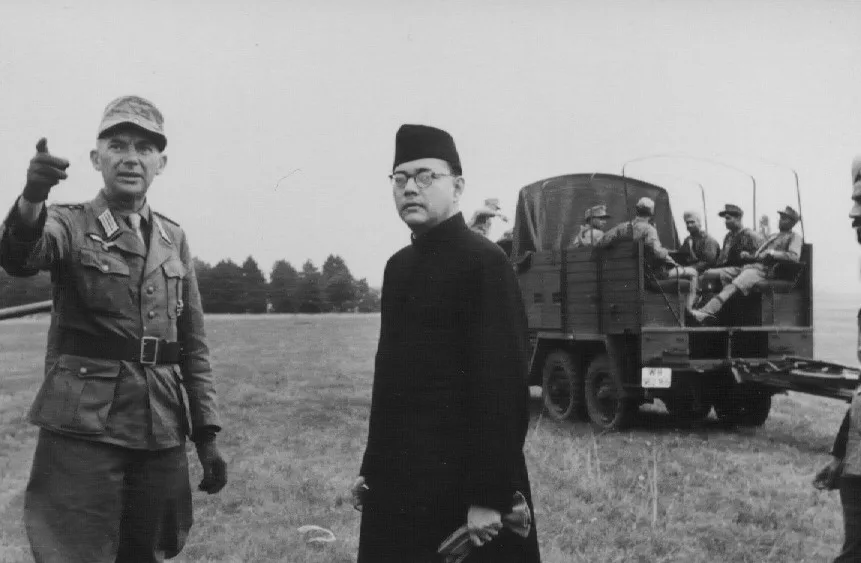
In Germany he set up the Free India Centre and the Indian Legion, and in 1943 travelled by submarine to Japanese-held Southeast Asia. The Provisional Government of Free India issued its own currency and stamps and declared war on Britain and the United States. The INA’s Rani of Jhansi Regiment, led by Lakshmi Sahgal, was one of the first all-women combat units of the war.
Legacy
The trials of INA officers at the Red Fort in 1945–46 provoked nationwide protests and are widely seen as having hastened the end of British rule. Since 2021 India has marked his birthday, 23 January, as Parakram Diwas (Day of Valour).
Mystery of his death
Several Indian inquiries examined his death. The Shah Nawaz Committee (1956) and the Khosla Commission (1970) concluded he died in the 1945 air crash; the Mukherjee Commission (2005) disagreed. His ashes are kept at the Renkō-ji temple in Tokyo.
Timeline
-
1897
Born in Cuttack, Bengal Presidency (now Odisha)
-
1920
Passes the Indian Civil Service examination
Resigns the next year to join the freedom struggle.
-
1930
Mayor of Calcutta
Elected while also leading nationalist protests.
-
1938
President of the Congress
Presides over the Haripura session.
-
1939
Re-elected and resigns; founds the Forward Bloc
After a split with the Congress leadership.
-
1941
Escapes house arrest
Leaves India in disguise, reaching Germany.
-
1942
Founds the Free India Centre and Indian Legion in Germany
-
1943
Proclaims Azad Hind in Singapore
Takes command of the Indian National Army.
-
1943
Submarine journey to Southeast Asia
-
1945
Dies after a plane crash in Taiwan
On 18 August, according to official findings.
-
1956
Shah Nawaz Committee report
-
2005
Mukherjee Commission report
-
2021
Parakram Diwas declared
23 January.
-
1945
Died, aged 48
In their own words
“Give me blood, and I will give you freedom!”
Did you know?
-
1
He finished fourth in the Indian Civil Service examination before resigning.
-
2
Kolkata’s international airport is named Netaji Subhas Chandra Bose International Airport.
-
3
The salutation “Jai Hind” was popularised by the Indian National Army.
-
4
He escaped house arrest disguised as an insurance agent.
-
5
His government-in-exile issued its own stamps and currency.
-
6
His ashes are believed to be kept at a temple in Tokyo.
Gallery
Connections
Related people
Also born on 23 January

Frequently asked
Who is Subhas Chandra Bose?
Subhas Chandra Bose, known as Netaji, was a twice-elected president of the Indian National Congress who broke with its leadership and sought armed help abroad to end British rule. He led the Indian National Army and the Provisional Government of Free India during the Second World War.
When did Subhas Chandra Bose die?
Subhas Chandra Bose died on 18 August 1945 at the age of 48.
Where is Subhas Chandra Bose from?
Subhas Chandra Bose was born in Cuttack, Bengal Presidency (now Odisha).
What is Subhas Chandra Bose known for?
Subhas Chandra Bose is best known for The Azad Hind government and the Indian National Army; “Give me blood, and I will give you freedom”.
Who is Subhas Chandra Bose married to?
Spouse: Emilie Schenkl.
References
- Subhas Chandra Bose — Wikipedia. Wikipedia. Retrieved 26 October 2026.
- Subhas Chandra Bose — Britannica. Encyclopaedia Britannica. Retrieved 26 October 2026.
- Subhas Chandra Bose — IMDb. IMDb. Retrieved 26 October 2026.
- Subhas Chandra Bose — Goodreads author page. Goodreads. Retrieved 26 October 2026.
- Subhas Chandra Bose — Hindi Wikipedia. Wikipedia (Hindi). Retrieved 26 October 2026.
- Official website. netaji.org. Retrieved 26 October 2026.
- Subhas Chandra Bose (Q2153) — structured data. Wikidata. Retrieved 26 October 2026.
External links
About this profile
- Researched by the TrackFame editors; reviewed by Sanjay Sokal
- First published 26 October 2026
- Last updated
Cite this page
“Subhas Chandra Bose.” TrackFame, last updated 26 October 2026. https://trackfame.com/person/subhas-chandra-bose
Discussion 0
Sign in or create an account to join the discussion.
No comments yet — be the first.
More in Politics & Leadership
 Politics & Leadership
Vallabhbhai Patel
First Deputy Prime Minister and Home Minister of India
1875 – 1950
 Politics & Leadership
Indira Gandhi
Third Prime Minister of India and the only woman to hold the office
1917 – 1984
 Politics & Leadership
Lal Bahadur Shastri
Second Prime Minister of India (1964–1966)
1904 – 1966
 Politics & Leadership
Rajiv Gandhi
Sixth Prime Minister of India (1984–1989)
1944 – 1991
 Politics & Leadership
Jawaharlal Nehru
First Prime Minister of India (1947–1964)
1889 – 1964
 Politics & Leadership
Mahatma Gandhi
Leader of India’s independence movement and pioneer of non-violent resistance
1869 – 1948