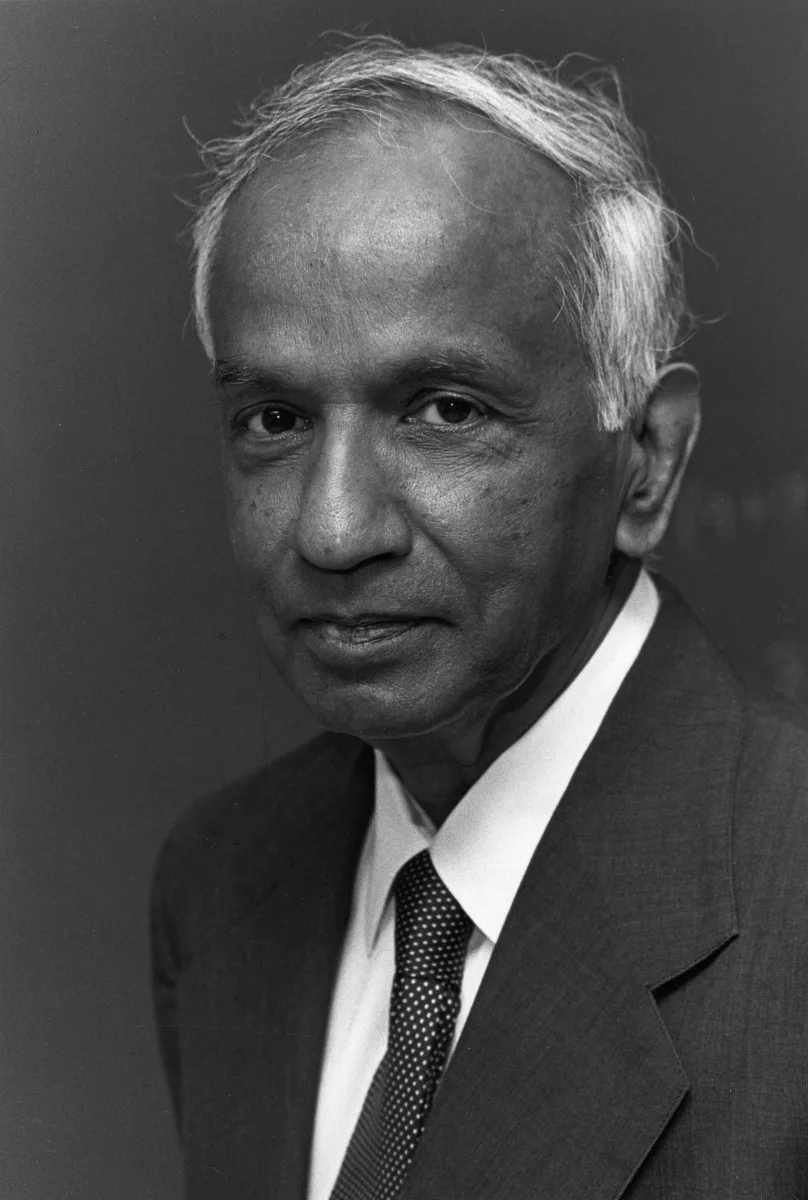
Subrahmanyan Chandrasekhar
Astrophysicist who discovered the Chandrasekhar limit
- Lived
- 84 yrs
- 1910 – 1995
- Works listed
- 3
- Book
- Honours
- 3
- Most recent 1983
- Profile views
- 5
- 0 followers
Subrahmanyan Chandrasekhar was an Indian-American astrophysicist who showed that stars above a certain mass cannot end their lives as white dwarfs — the Chandrasekhar limit. He shared the 1983 Nobel Prize in Physics, and NASA’s Chandra X-ray Observatory is named after him. He died in 1995.
Biography
A calculation at sea
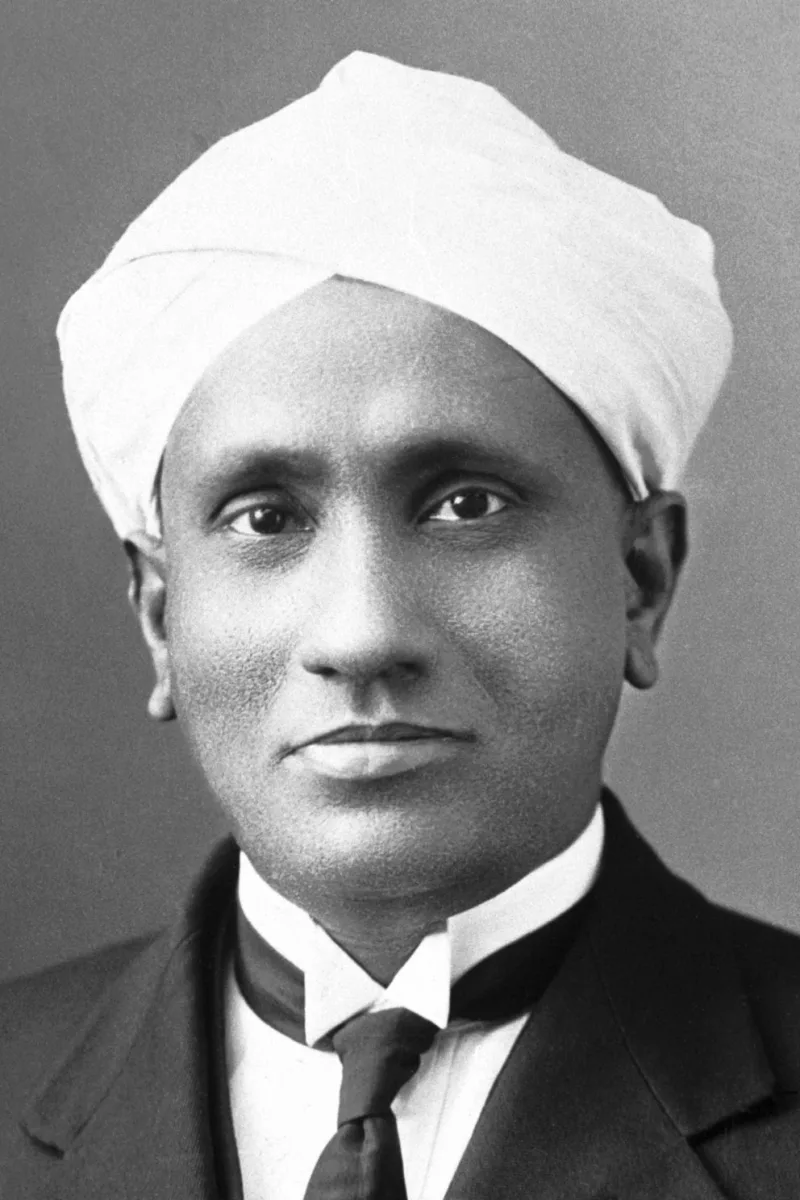
Chandrasekhar, a nephew of C. V. Raman, grew up in Madras and studied at Presidency College. In 1930, aged nineteen, on the ship taking him to study at Cambridge, he combined relativity and quantum statistics to show that a white dwarf star cannot be more massive than about 1.4 times the Sun.
Against Eddington
The result implied that heavier stars must collapse further — into what we now call neutron stars and black holes. In 1935 the leading astronomer Arthur Eddington publicly ridiculed the idea, a painful episode for the young scientist. Over the following decades the limit was fully accepted.
Chicago
In 1937 Chandrasekhar joined the University of Chicago, where he spent the rest of his career, working at Yerkes Observatory and editing the Astrophysical Journal for nearly twenty years. He tackled one field after another — stellar dynamics, radiative transfer, hydrodynamics, black holes — writing a definitive book on each.
Nobel and legacy
He shared the 1983 Nobel Prize in Physics with William Fowler for work on the structure and evolution of stars. In his last years he wrote Newton’s Principia for the Common Reader. He received the Padma Vibhushan in 1968, died in Chicago on 21 August 1995, and in 1999 NASA named its Chandra X-ray Observatory in his honour.
Timeline
-
1910
Born in Lahore, Punjab, British India (now Pakistan)
-
1930
Works out the Chandrasekhar limit on the voyage to England
-
1935
Clash with Eddington
-
1937
Joins the University of Chicago
-
1952
Becomes editor of the Astrophysical Journal
-
1968
Padma Vibhushan
-
1983
Nobel Prize in Physics
-
1995
Dies in Chicago
-
1999
Chandra X-ray Observatory launched
-
1995
Died, aged 84
Notable works
-
1939
An Introduction to the Study of Stellar Structure Book
-
1983
The Mathematical Theory of Black Holes Book
-
1995
Newton’s Principia for the Common Reader Book
Awards and honours
-
Fellow of the Royal Society
1944
-
Padma Vibhushan
1968
-
Nobel Prize in Physics
1983 · Shared with William Fowler.
Did you know?
-
1
He was C. V. Raman’s nephew.
-
2
He worked out his famous limit while travelling by ship at nineteen.
-
3
A NASA space telescope is named after him.
Connections
Frequently asked
Who is Subrahmanyan Chandrasekhar?
Subrahmanyan Chandrasekhar was an Indian-American astrophysicist who showed that stars above a certain mass cannot end their lives as white dwarfs — the Chandrasekhar limit. He shared the 1983 Nobel Prize in Physics, and NASA’s Chandra X-ray Observatory is named after him. He died in 1995.
When did Subrahmanyan Chandrasekhar die?
Subrahmanyan Chandrasekhar died on 21 August 1995 at the age of 84.
Where is Subrahmanyan Chandrasekhar from?
Subrahmanyan Chandrasekhar was born in Lahore, Punjab, British India (now Pakistan).
What is Subrahmanyan Chandrasekhar known for?
Subrahmanyan Chandrasekhar is best known for The Chandrasekhar limit for white dwarf stars; Nobel Prize in Physics 1983.
What awards has Subrahmanyan Chandrasekhar received?
Notable honours include Fellow of the Royal Society (1944), Padma Vibhushan (1968), Nobel Prize in Physics (1983).
References
- Subrahmanyan Chandrasekhar — Wikipedia. Wikipedia. Retrieved 27 October 2026.
- Subrahmanyan Chandrasekhar — Britannica. Encyclopaedia Britannica. Retrieved 27 October 2026.
- Subrahmanyan Chandrasekhar — Nobel Prize facts. NobelPrize.org. Retrieved 27 October 2026.
- Subrahmanyan Chandrasekhar — Hindi Wikipedia. Wikipedia (Hindi). Retrieved 27 October 2026.
- Subrahmanyan Chandrasekhar (Q148109) — structured data. Wikidata. Retrieved 27 October 2026.
Includes material from the Wikipedia article “Subrahmanyan Chandrasekhar”, licensed under CC BY-SA 4.0. That text is available under the same licence. Learn more
External links
Featured in
About this profile
- Researched by the TrackFame editorial team; reviewed by Sanjay Sokal under our editorial policy
- First published 27 October 2026
- Last updated
Cite this page
“Subrahmanyan Chandrasekhar.” TrackFame, last updated 28 October 2026. https://trackfame.com/person/subrahmanyan-chandrasekhar
Discussion 0
Sign in or create an account to join the discussion.
No comments yet — be the first.
More in Science
 Science
Satish Dhawan
Aerospace engineer who led ISRO after Vikram Sarabhai
1920 – 2002
 Science
U. R. Rao
Space scientist who built India’s first satellite
1932 – 2017
 Science
K. Kasturirangan
Space scientist who chaired ISRO and the National Education Policy committee
1940 – 2025
 Science
Vikram Sarabhai
Physicist and father of India’s space programme
1919 – 1971
 Science
Meghnad Saha
Astrophysicist known for the Saha ionisation equation
1893 – 1956
 Science
K. Sivan
Rocket scientist and former chairman of ISRO
Born 1957