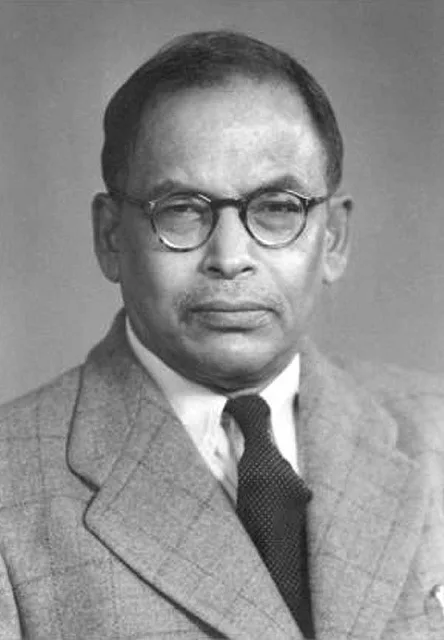
Meghnad Saha
Astrophysicist known for the Saha ionisation equation
- Lived
- 62 yrs
- 1893 – 1956
- Works listed
- 0
- Career highlights
- Honours
- 1
- Most recent 1927
- Profile views
- 5
- 0 followers
Meghnad Saha was an Indian astrophysicist whose ionisation equation explained the spectra of stars and became a foundation of modern astrophysics. He founded the Institute of Nuclear Physics in Calcutta, planned river projects and was elected to India’s first Lok Sabha. He died in 1956.
Biography
A shopkeeper’s son
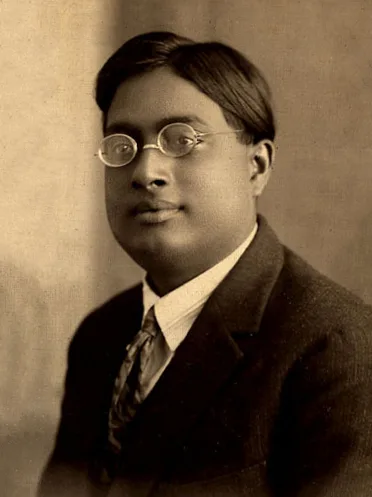
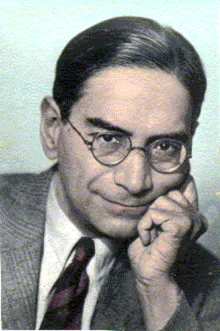
Saha was born into a poor family; his father ran a small grocery. Bright at school, he was expelled from a government school in Dhaka for joining a boycott of the governor’s visit during the Swadeshi movement. He studied at Presidency College, Calcutta, alongside Satyendra Nath Bose and Prasanta Chandra Mahalanobis.
The ionisation equation
In 1920 Saha published an equation linking the temperature and pressure of a gas to the fraction of its atoms that are ionised. Applied to stars, it explained why their spectra differ and allowed astronomers to read their temperatures and compositions. He was elected a Fellow of the Royal Society in 1927.
Institution builder
Saha founded the National Academy of Sciences in Allahabad (1930) and in 1949 the Institute of Nuclear Physics in Calcutta, now the Saha Institute of Nuclear Physics, where India’s first cyclotron was built. He pushed for planned river-valley development, influencing the Damodar Valley Corporation.
Public life
In 1952 he was elected to the Lok Sabha as an independent from Calcutta. He chaired the Calendar Reform Committee, whose work led to the Indian national calendar adopted in 1957. He died of a heart attack in Delhi on 16 February 1956.
Timeline
-
1893
Born in Shaoratoli, Dacca district, Bengal Presidency (now Bangladesh)
-
1920
Publishes the ionisation equation
-
1927
Fellow of the Royal Society
-
1930
Founds the National Academy of Sciences, India
-
1949
Founds the Institute of Nuclear Physics
-
1952
Elected to the Lok Sabha; heads calendar reform
-
1956
Dies in Delhi
-
1956
Died, aged 62
Awards and honours
-
Fellow of the Royal Society
1927
Did you know?
-
1
He was expelled from school for joining a protest during the Swadeshi movement.
-
2
He studied alongside S. N. Bose and P. C. Mahalanobis.
-
3
His committee shaped India’s national calendar.
Connections
Frequently asked
Who is Meghnad Saha?
Meghnad Saha was an Indian astrophysicist whose ionisation equation explained the spectra of stars and became a foundation of modern astrophysics. He founded the Institute of Nuclear Physics in Calcutta, planned river projects and was elected to India’s first Lok Sabha. He died in 1956.
When did Meghnad Saha die?
Meghnad Saha died on 16 February 1956 at the age of 62.
Where is Meghnad Saha from?
Meghnad Saha was born in Shaoratoli, Dacca district, Bengal Presidency (now Bangladesh).
What is Meghnad Saha known for?
Meghnad Saha is best known for The Saha ionisation equation; founding the Saha Institute of Nuclear Physics; calendar reform.
What awards has Meghnad Saha received?
Notable honours include Fellow of the Royal Society (1927).
References
- Meghnad Saha — Wikipedia. Wikipedia. Retrieved 27 October 2026.
- Meghnad Saha — Britannica. Encyclopaedia Britannica. Retrieved 27 October 2026.
- Meghnad Saha — Hindi Wikipedia. Wikipedia (Hindi). Retrieved 27 October 2026.
- Meghnad Saha (Q377898) — structured data. Wikidata. Retrieved 27 October 2026.
Includes material from the Wikipedia article “Meghnad Saha”, licensed under CC BY-SA 4.0. That text is available under the same licence. Learn more
External links
Featured in
About this profile
- Researched by the TrackFame editorial team; reviewed by Sanjay Sokal under our editorial policy
- First published 27 October 2026
- Last updated
Cite this page
“Meghnad Saha.” TrackFame, last updated 28 October 2026. https://trackfame.com/person/meghnad-saha
Discussion 0
Sign in or create an account to join the discussion.
No comments yet — be the first.
More in Science
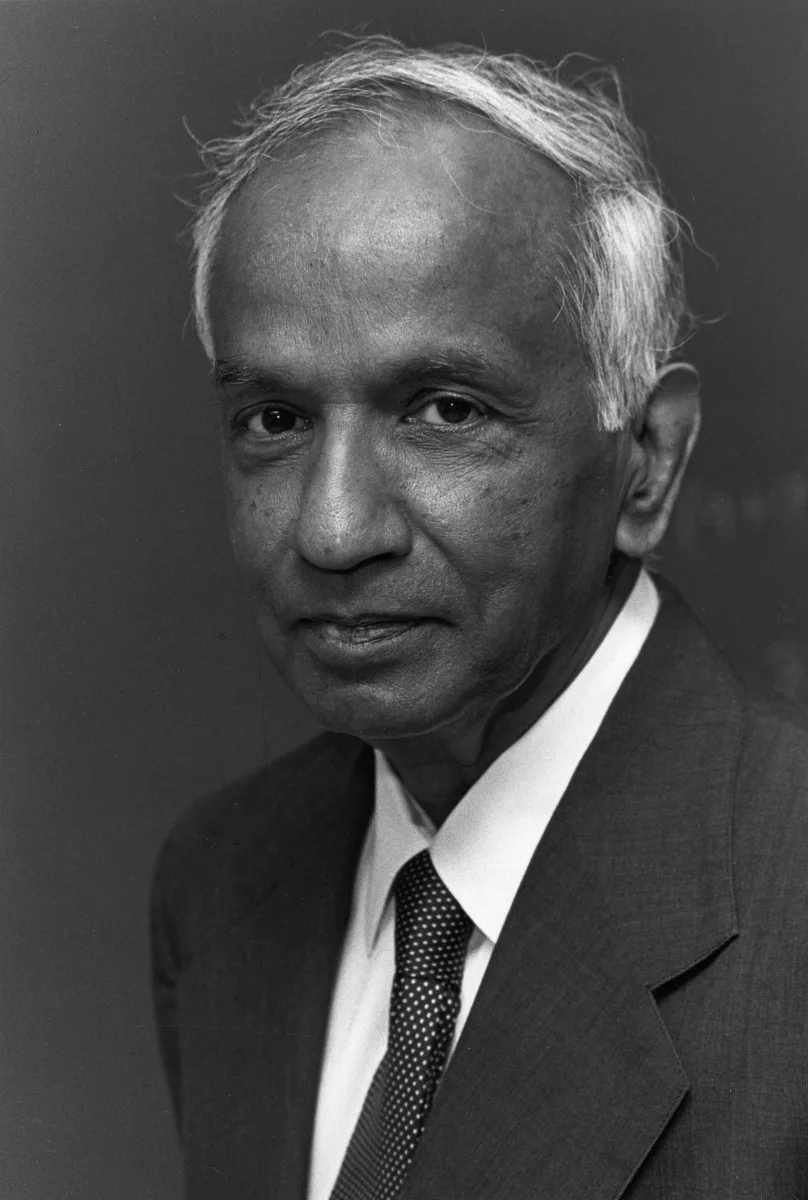 Science
Subrahmanyan Chandrasekhar
Astrophysicist who discovered the Chandrasekhar limit
1910 – 1995
 Science
Satish Dhawan
Aerospace engineer who led ISRO after Vikram Sarabhai
1920 – 2002
 Science
Janaki Ammal
Botanist and plant cytogeneticist
1897 – 1984
 Science
Salim Ali
Ornithologist known as the “Birdman of India”
1896 – 1987
 Science
M. S. Swaminathan
Agricultural scientist known as the father of India’s Green Revolution
1925 – 2023
 Science
K. Kasturirangan
Space scientist who chaired ISRO and the National Education Policy committee
1940 – 2025