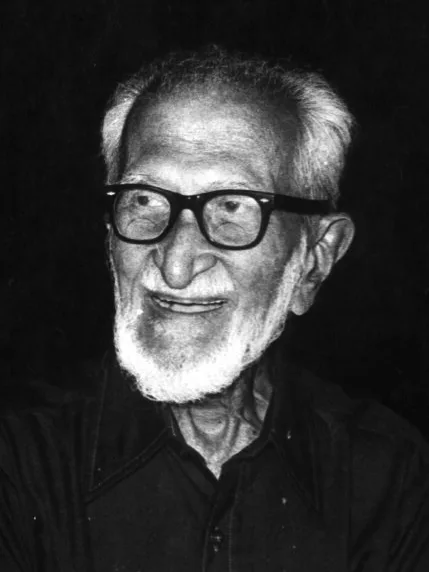
Salim Ali
Ornithologist known as the “Birdman of India”
- Lived
- 90 yrs
- 1896 – 1987
- Works listed
- 3
- Book
- Honours
- 3
- Most recent 1976
- Profile views
- 3
- 0 followers
Salim Ali was an ornithologist and naturalist who carried out the first systematic bird surveys across India and wrote books that made birdwatching popular. Known as the “Birdman of India”, he campaigned to protect places such as Bharatpur and Silent Valley. He died in 1987.
Biography
The yellow-throated sparrow
Orphaned young, Salim Ali was raised by an uncle in Bombay. As a boy he shot a sparrow with a yellow mark on its throat and took it to the Bombay Natural History Society, where its secretary identified the bird and showed him the collection — the start of a lifelong passion.
Bird surveys
After working in Burma and studying in Germany, he conducted bird surveys for princely states such as Hyderabad, Travancore and Mysore in the 1930s and 1940s, combining fieldwork with careful study of behaviour and ecology rather than just collecting specimens.
Books for everyone
The Book of Indian Birds (1941) introduced generations of Indians to birdwatching. With American ornithologist S. Dillon Ripley he wrote the ten-volume Handbook of the Birds of India and Pakistan. His autobiography, The Fall of a Sparrow, appeared in 1985.
Conservation
He led the Bombay Natural History Society for decades and lobbied to protect the Bharatpur bird sanctuary (now Keoladeo National Park) and Kerala’s Silent Valley. He received the Padma Bhushan in 1958 and the Padma Vibhushan in 1976, was nominated to the Rajya Sabha in 1985, and died on 20 June 1987. The Salim Ali Centre for Ornithology and Natural History in Coimbatore bears his name.
Timeline
-
1896
Born in Bombay, Bombay Presidency (now Mumbai)
-
1941
The Book of Indian Birds
-
1958
Padma Bhushan
-
1968
First volume of the Handbook with Dillon Ripley
-
1976
Padma Vibhushan
-
1985
Nominated to the Rajya Sabha; publishes autobiography
-
1987
Dies in Bombay
-
1987
Died, aged 90
Notable works
-
1941
The Book of Indian Birds Book
-
1968
Handbook of the Birds of India and Pakistan Book
Ten volumes, with S. Dillon Ripley.
-
1985
The Fall of a Sparrow Book
Autobiography.
Awards and honours
-
Padma Bhushan
1958
-
Padma Vibhushan
1976
-
J. Paul Getty Wildlife Conservation Prize
1976
Did you know?
-
1
A sparrow he shot as a boy started his career.
-
2
Two bird subspecies are named after him.
-
3
He was nominated to the Rajya Sabha in his late eighties.
Connections
Frequently asked
Who is Salim Ali?
Salim Ali was an ornithologist and naturalist who carried out the first systematic bird surveys across India and wrote books that made birdwatching popular. Known as the “Birdman of India”, he campaigned to protect places such as Bharatpur and Silent Valley. He died in 1987.
When did Salim Ali die?
Salim Ali died on 27 July 1987 at the age of 90.
Where is Salim Ali from?
Salim Ali was born in Bombay, Bombay Presidency (now Mumbai).
What is Salim Ali known for?
Salim Ali is best known for The Book of Indian Birds; the Handbook of the Birds of India and Pakistan; bird conservation.
What awards has Salim Ali received?
Notable honours include Padma Bhushan (1958), Padma Vibhushan (1976), J. Paul Getty Wildlife Conservation Prize (1976).
References
- Salim Ali — Wikipedia. Wikipedia. Retrieved 27 October 2026.
- Salim Ali — Hindi Wikipedia. Wikipedia (Hindi). Retrieved 27 October 2026.
- Salim Ali (Q2904990) — structured data. Wikidata. Retrieved 27 October 2026.
Includes material from the Wikipedia article “Salim Ali”, licensed under CC BY-SA 4.0. That text is available under the same licence. Learn more
External links
About this profile
- Researched by the TrackFame editorial team; reviewed by Sanjay Sokal under our editorial policy
- First published 27 October 2026
- Last updated
Cite this page
“Salim Ali.” TrackFame, last updated 28 October 2026. https://trackfame.com/person/salim-ali
Discussion 0
Sign in or create an account to join the discussion.
No comments yet — be the first.
More in Science
 Science
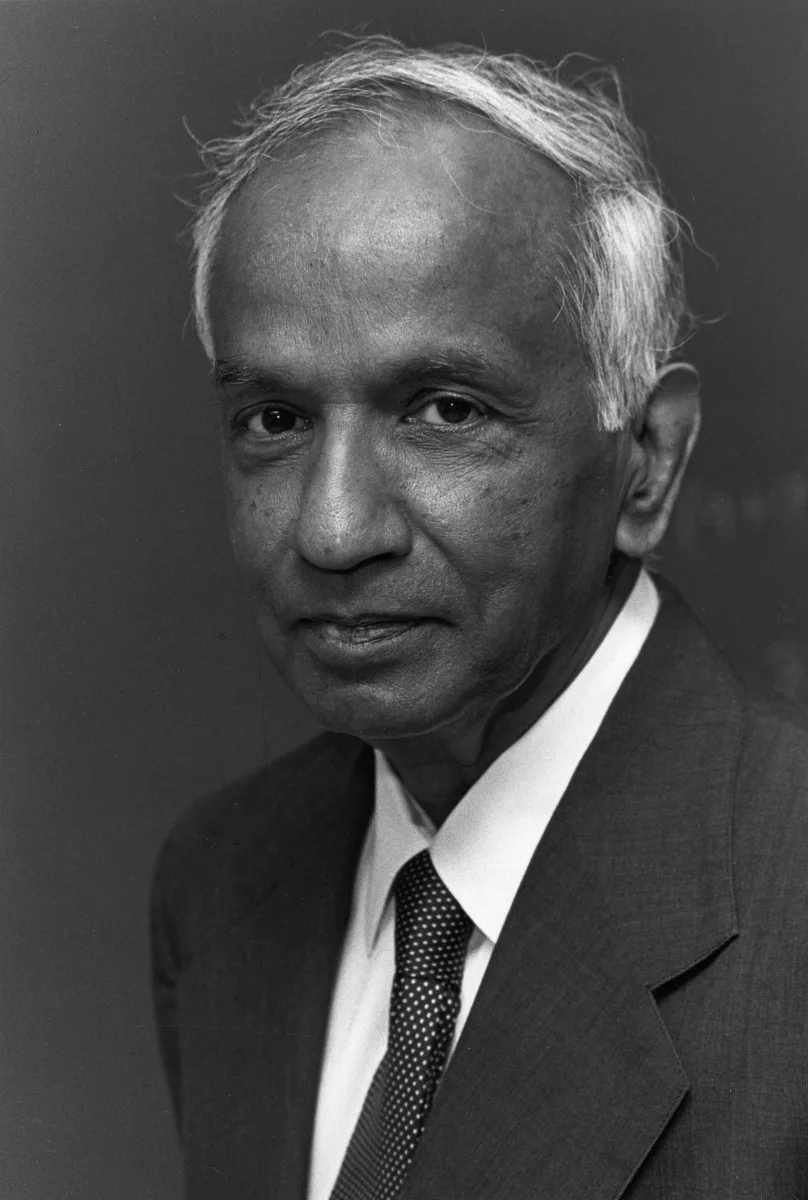
Subrahmanyan Chandrasekhar
Astrophysicist who discovered the Chandrasekhar limit
1910 – 1995
 Science
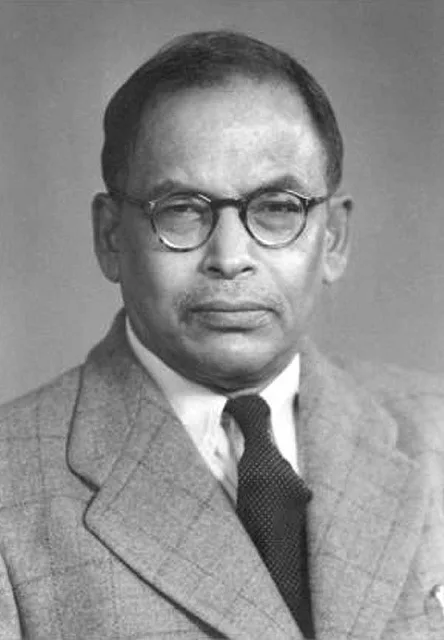
Meghnad Saha
Astrophysicist known for the Saha ionisation equation
1893 – 1956
 Science
Satish Dhawan
Aerospace engineer who led ISRO after Vikram Sarabhai
1920 – 2002
 Activism & Humanitarian
Sunderlal Bahuguna
Environmentalist and leader of the Chipko movement
1927 – 2021
 Activism & Humanitarian
Savitribai Phule
Pioneer of women’s education and India’s first woman teacher
1831 – 1897
 Activism & Humanitarian
Ram Mohan Roy
Social reformer known as the father of the Bengal Renaissance
1772 – 1833