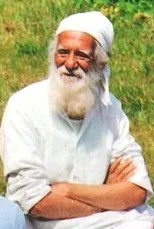
Sunderlal Bahuguna
Environmentalist and leader of the Chipko movement
- Lived
- 94 yrs
- 1927 – 2021
- Works listed
- 0
- Career highlights
- Honours
- 2
- Most recent 2009
- Profile views
- 4
- 0 followers
Sunderlal Bahuguna was a Gandhian environmentalist who became the best-known voice of the Chipko movement, in which villagers in the Himalayas hugged trees to stop them being felled. He later led a long campaign against the Tehri dam. He died in 2021.
Biography
Gandhian worker
Bahuguna joined the freedom movement as a teenager and was influenced by Gandhian workers such as Mirabehn. After independence he and his wife Vimla set up an ashram in the hills and worked against untouchability and alcohol, and for women’s rights.
Chipko
In the early 1970s, villagers in the Garhwal Himalayas, led by figures including Gaura Devi and Chandi Prasad Bhatt, began hugging trees to stop contractors felling them. Bahuguna spread the movement’s message through long walks and talks, and his campaigning helped persuade Prime Minister Indira Gandhi to impose a ban on felling green trees in the Himalayan forests of Uttar Pradesh in 1980.
A Himalayan march
From 1981 to 1983 he walked about 4,800 kilometres across the Himalayas to raise awareness of deforestation. His slogan “Ecology is permanent economy” became famous. Chipko received the Right Livelihood Award in 1987.
Tehri dam and honours
For years he opposed the Tehri dam on the Bhagirathi river on safety and environmental grounds, undertaking long fasts. He turned down the Padma Shri in 1981 in protest at continued felling, and accepted the Padma Vibhushan in 2009. He died of Covid-19 in Rishikesh on 21 May 2021.
Timeline
-
1927
Born in Maroda, Tehri Garhwal, United Provinces (now Uttarakhand)
-
1973
Chipko movement begins
-
1980
Ban on green felling in the Himalayan forests
-
1981
Declines the Padma Shri; begins Himalayan march
-
1987
Right Livelihood Award to Chipko
-
2009
Padma Vibhushan
-
2021
Dies in Rishikesh
-
2021
Died, aged 94
Awards and honours
-
Right Livelihood Award
1987 · For the Chipko movement.
-
Padma Vibhushan
2009
Did you know?
-
1
He walked about 4,800 km across the Himalayas.
-
2
He refused the Padma Shri in protest at tree felling.
-
3
“Chipko” means “to hug” or “to cling”.
Connections
Related people
Also born on 9 January


Frequently asked
Who is Sunderlal Bahuguna?
Sunderlal Bahuguna was a Gandhian environmentalist who became the best-known voice of the Chipko movement, in which villagers in the Himalayas hugged trees to stop them being felled. He later led a long campaign against the Tehri dam. He died in 2021.
When did Sunderlal Bahuguna die?
Sunderlal Bahuguna died on 21 May 2021 at the age of 94.
Where is Sunderlal Bahuguna from?
Sunderlal Bahuguna was born in Maroda, Tehri Garhwal, United Provinces (now Uttarakhand).
What is Sunderlal Bahuguna known for?
Sunderlal Bahuguna is best known for The Chipko movement; opposing the Tehri dam; “Ecology is permanent economy”.
What awards has Sunderlal Bahuguna received?
Notable honours include Right Livelihood Award (1987), Padma Vibhushan (2009).
Who is Sunderlal Bahuguna married to?
Spouse: Vimla Bahuguna.
References
- Sunderlal Bahuguna — Wikipedia. Wikipedia. Retrieved 27 October 2026.
- Sunderlal Bahuguna — Hindi Wikipedia. Wikipedia (Hindi). Retrieved 27 October 2026.
- Sunderlal Bahuguna (Q3595121) — structured data. Wikidata. Retrieved 27 October 2026.
Includes material from the Wikipedia article “Sunderlal Bahuguna”, licensed under CC BY-SA 4.0. That text is available under the same licence. Learn more
External links
About this profile
- Researched by the TrackFame editorial team; reviewed by Sanjay Sokal under our editorial policy
- First published 27 October 2026
- Last updated
Cite this page
“Sunderlal Bahuguna.” TrackFame, last updated 28 October 2026. https://trackfame.com/person/sunderlal-bahuguna
Discussion 0
Sign in or create an account to join the discussion.
No comments yet — be the first.
More in Activism & Humanitarian
 Activism & Humanitarian
Savitribai Phule
Pioneer of women’s education and India’s first woman teacher
1831 – 1897
 Literature
Ishwar Chandra Vidyasagar
Educator and reformer who championed widow remarriage
1820 – 1891
 Literature
Mahasweta Devi
Bengali writer and activist for tribal communities
1926 – 2016
 Activism & Humanitarian
Baba Amte
Social worker who cared for people affected by leprosy
1914 – 2008
 Science
Salim Ali
Ornithologist known as the “Birdman of India”
1896 – 1987
 Activism & Humanitarian
Ram Mohan Roy
Social reformer known as the father of the Bengal Renaissance
1772 – 1833