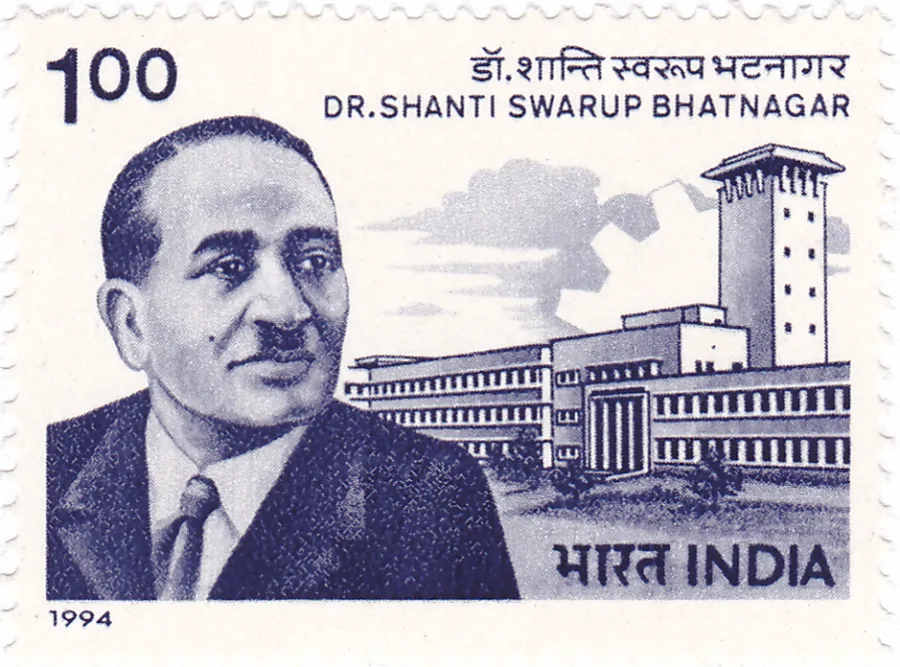
Shanti Swarup Bhatnagar
Chemist and founding director of CSIR
- Lived
- 60 yrs
- 1894 – 1955
- Works listed
- 0
- Career highlights
- Honours
- 3
- Most recent 1954
- Profile views
- 2
- 0 followers
Shanti Swarup Bhatnagar was a chemist who founded the Council of Scientific and Industrial Research (CSIR) and set up a network of national laboratories after independence. India’s most prestigious science prize for young researchers is named after him. He died in 1955.
Biography
Early life
Bhatnagar lost his father as a baby and was raised by his maternal grandfather, an engineer. He studied in Lahore and earned a doctorate at University College London in 1921 under chemist Frederick Donnan.
Chemist
Returning to India, he taught at Banaras Hindu University — for which he wrote the university song — and then at Punjab University in Lahore, where he became known for research in magnetochemistry and colloids. He also solved practical problems for industry, such as a method to deal with mud in oil drilling.
Building CSIR
In 1940 he became director of the Board of Scientific and Industrial Research, which in 1942 became the Council of Scientific and Industrial Research. As its first director-general he established a chain of national laboratories, including the National Chemical Laboratory and the National Physical Laboratory.
Honours and legacy
He was knighted in 1941, elected a Fellow of the Royal Society in 1943 and received the Padma Bhushan in 1954. He was the first chairman of the University Grants Commission. He died on 1 January 1955; the Shanti Swarup Bhatnagar Prize, awarded since 1958, is one of India’s top science honours.
Timeline
-
1894
Born in Bhera, Shahpur district, Punjab, British India (now Pakistan)
-
1921
Doctorate in London
-
1941
Knighted
-
1942
CSIR established with him as director-general
-
1943
Fellow of the Royal Society
-
1953
First chairman of the University Grants Commission
-
1954
Padma Bhushan
-
1955
Dies in Delhi
-
1955
Died, aged 60
Awards and honours
-
Knight Bachelor
1941
-
Fellow of the Royal Society
1943
-
Padma Bhushan
1954
Did you know?
-
1
He wrote the official song of Banaras Hindu University.
-
2
He is known as the father of India’s research laboratories.
-
3
He also wrote Urdu poetry.
Connections
Related people
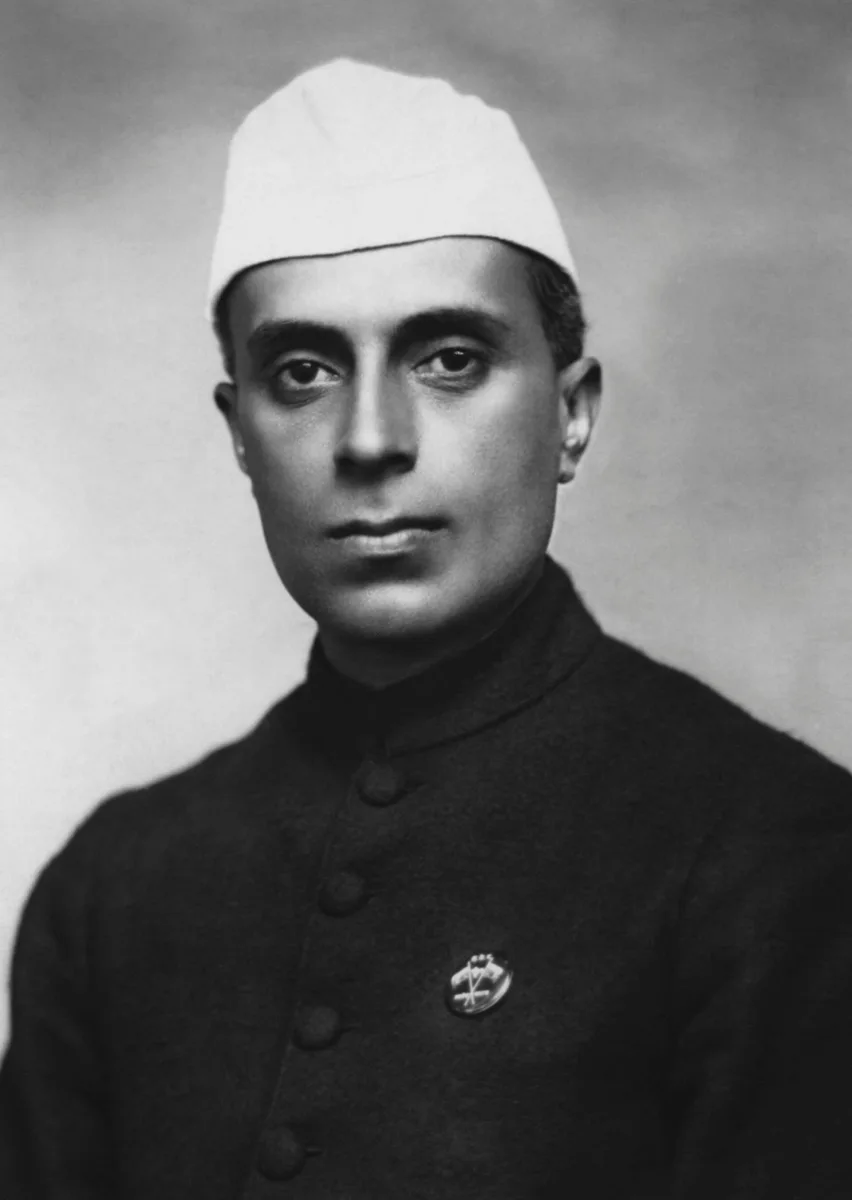
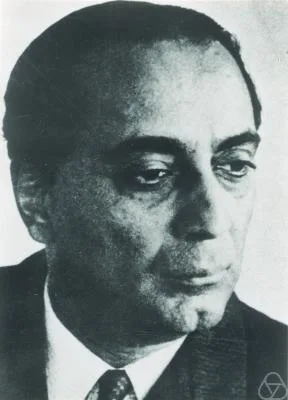
Also born on 21 February
Frequently asked
Who is Shanti Swarup Bhatnagar?
Shanti Swarup Bhatnagar was a chemist who founded the Council of Scientific and Industrial Research (CSIR) and set up a network of national laboratories after independence. India’s most prestigious science prize for young researchers is named after him. He died in 1955.
When did Shanti Swarup Bhatnagar die?
Shanti Swarup Bhatnagar died on 1 January 1955 at the age of 60.
Where is Shanti Swarup Bhatnagar from?
Shanti Swarup Bhatnagar was born in Bhera, Shahpur district, Punjab, British India (now Pakistan).
What is Shanti Swarup Bhatnagar known for?
Shanti Swarup Bhatnagar is best known for Founding the Council of Scientific and Industrial Research and its national laboratories.
What awards has Shanti Swarup Bhatnagar received?
Notable honours include Knight Bachelor (1941), Fellow of the Royal Society (1943), Padma Bhushan (1954).
References
- Shanti Swarup Bhatnagar — Wikipedia. Wikipedia. Retrieved 27 October 2026.
- Shanti Swarup Bhatnagar — Hindi Wikipedia. Wikipedia (Hindi). Retrieved 27 October 2026.
- Shanti Swarup Bhatnagar (Q3595877) — structured data. Wikidata. Retrieved 27 October 2026.
Includes material from the Wikipedia article “Shanti Swarup Bhatnagar”, licensed under CC BY-SA 4.0. That text is available under the same licence. Learn more
External links
About this profile
- Researched by the TrackFame editorial team; reviewed by Sanjay Sokal under our editorial policy
- First published 27 October 2026
- Last updated
Cite this page
“Shanti Swarup Bhatnagar.” TrackFame, last updated 28 October 2026. https://trackfame.com/person/shanti-swarup-bhatnagar
Discussion 0
Sign in or create an account to join the discussion.
No comments yet — be the first.
More in Science
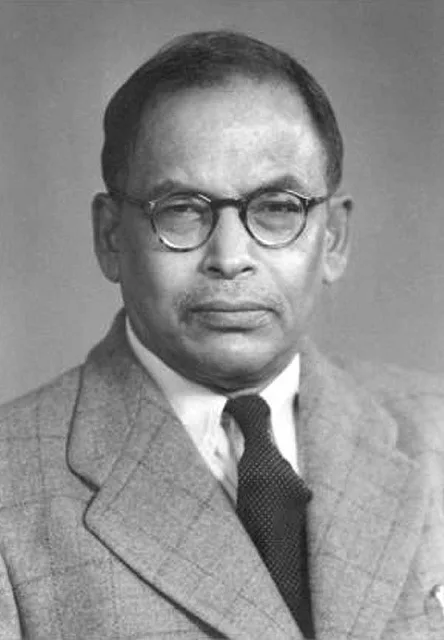 Science
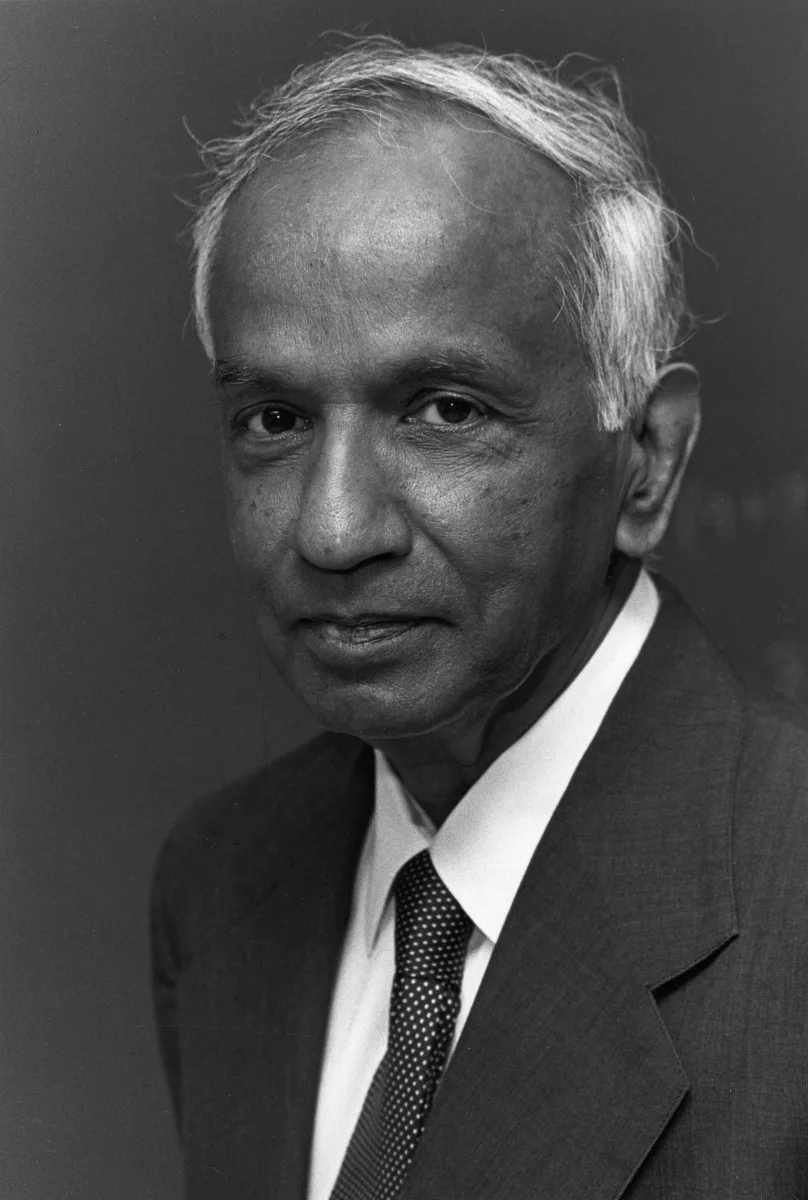
Meghnad Saha
Astrophysicist known for the Saha ionisation equation
1893 – 1956
 Science
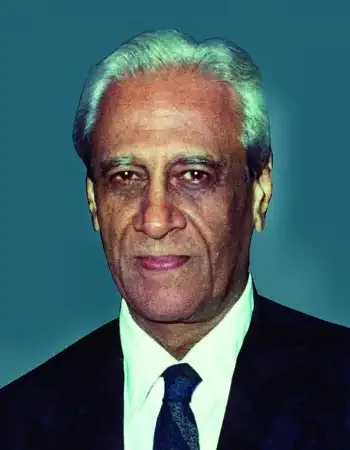
Subrahmanyan Chandrasekhar
Astrophysicist who discovered the Chandrasekhar limit
1910 – 1995
 Science
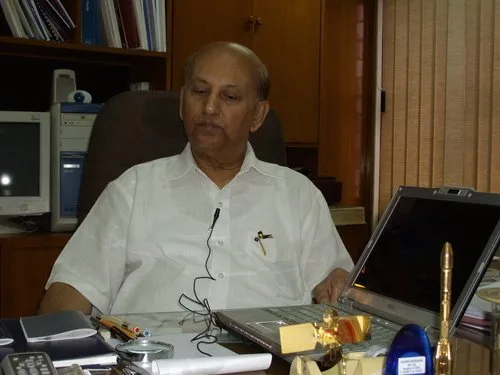
Satish Dhawan
Aerospace engineer who led ISRO after Vikram Sarabhai
1920 – 2002
 Science
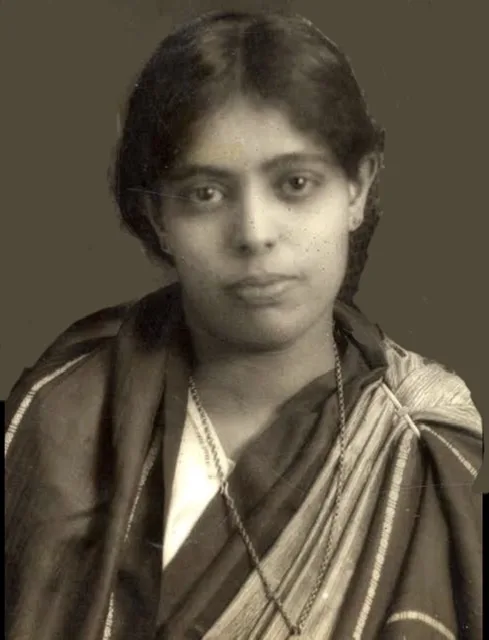
U. R. Rao
Space scientist who built India’s first satellite
1932 – 2017
 Science
Janaki Ammal
Botanist and plant cytogeneticist
1897 – 1984
 Science
P. C. Mahalanobis
Statistician who founded the Indian Statistical Institute
1893 – 1972